




What is Noise, Vibration, and Harshness?
Noise, vibration, and harshness (often abbreviated NVH) refers to the measurement and modification of the noises and vibrations made by a machine. NVH is primarily focused on passenger vehicles, such as cars and trucks, where noise and vibration are key considerations for user comfort.
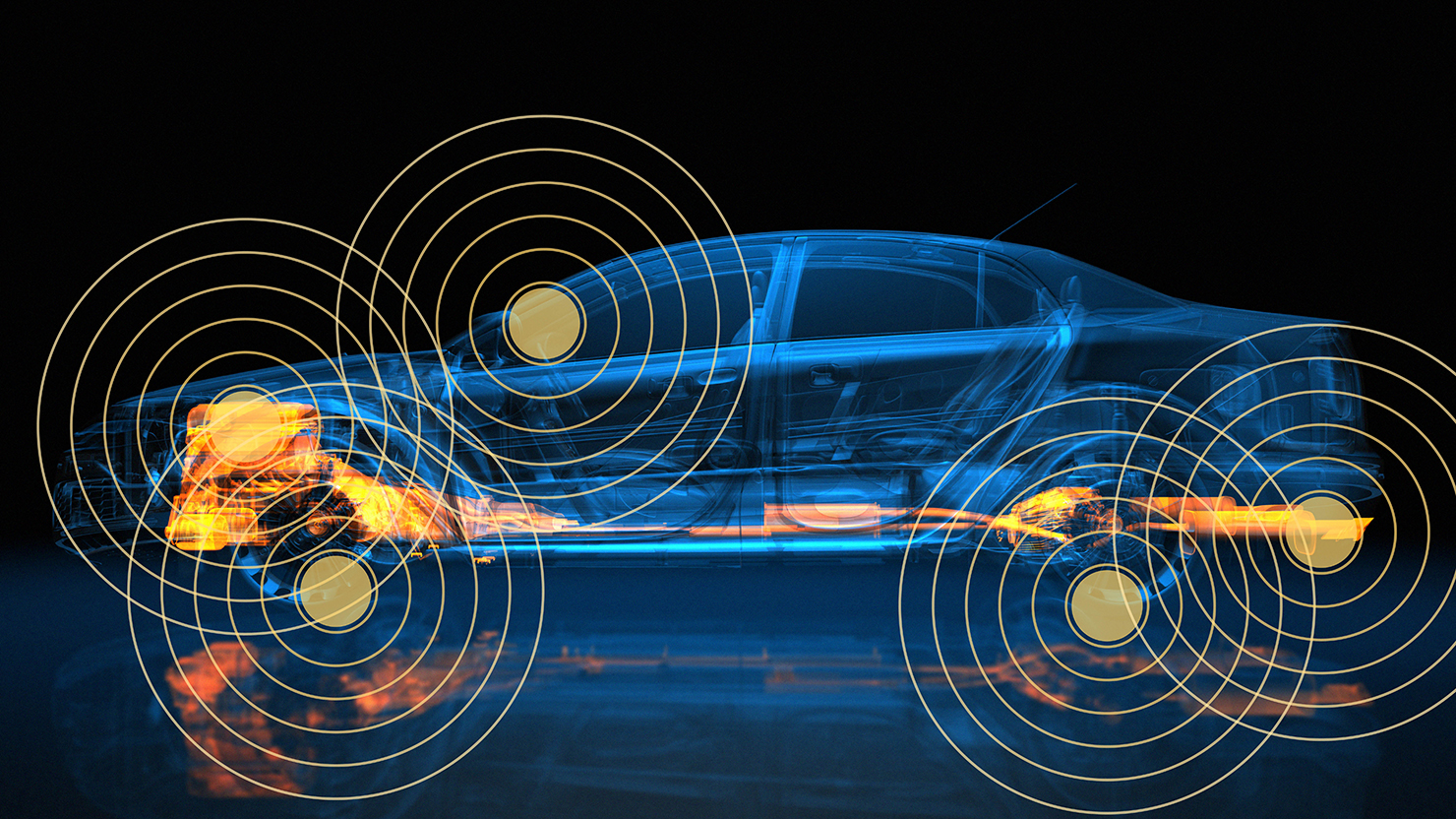
Why does NVH matter?
Noise and vibration are prominent elements of a passenger’s experience in a vehicle. NVH optimization allows automotive manufacturers to limit unwanted sounds and sensations (like loud roaring and jarring rumbling) while enhancing desirable ones (like the growl of a sports car or motorcycle). Electric vehicles, with different powertrains and lightweighting requirements, pose their own unique challenges.
As a result, proper NVH management in a passenger vehicle is critical to enhance comfort and safety, improve perceived quality, and differentiate a brand from its competition.
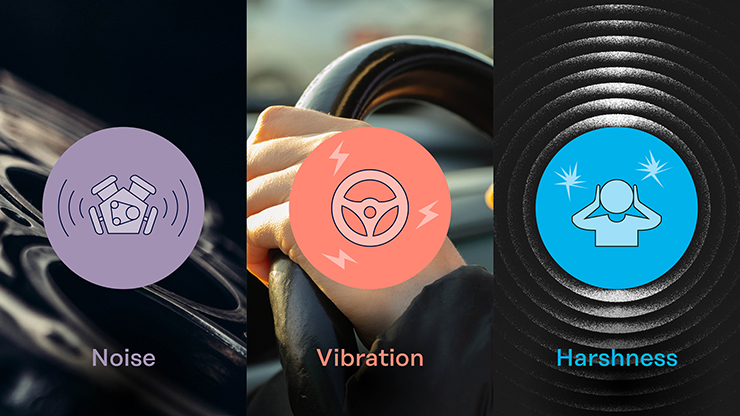
What is noise?
The sounds produced by a machine’s operation are referred to as noise, an objective, physical quantity spanning audible frequencies that can be measured in Hertz (Hz), often with issues concentrated from tens of Hz into several kHz (typically from 20 to 5,000 Hz, and sometimes beyond). Noise is primarily carried to the passenger through the air (airborne).
What is vibration?
The mechanical oscillation felt throughout a machine during operation is called vibration, and is typically most impactful from a few Hz up to the low hundreds of Hz, in most cases from 1 to 200 Hz. Vibration is primarily carried to the passenger through the structure (structure-borne).
What is harshness?
Harshness is the subjective experience of both noise and vibration combined. It is often evaluated through user trials, but not all noises and vibrations are equally harsh to all users.
Sources of NVH in cars
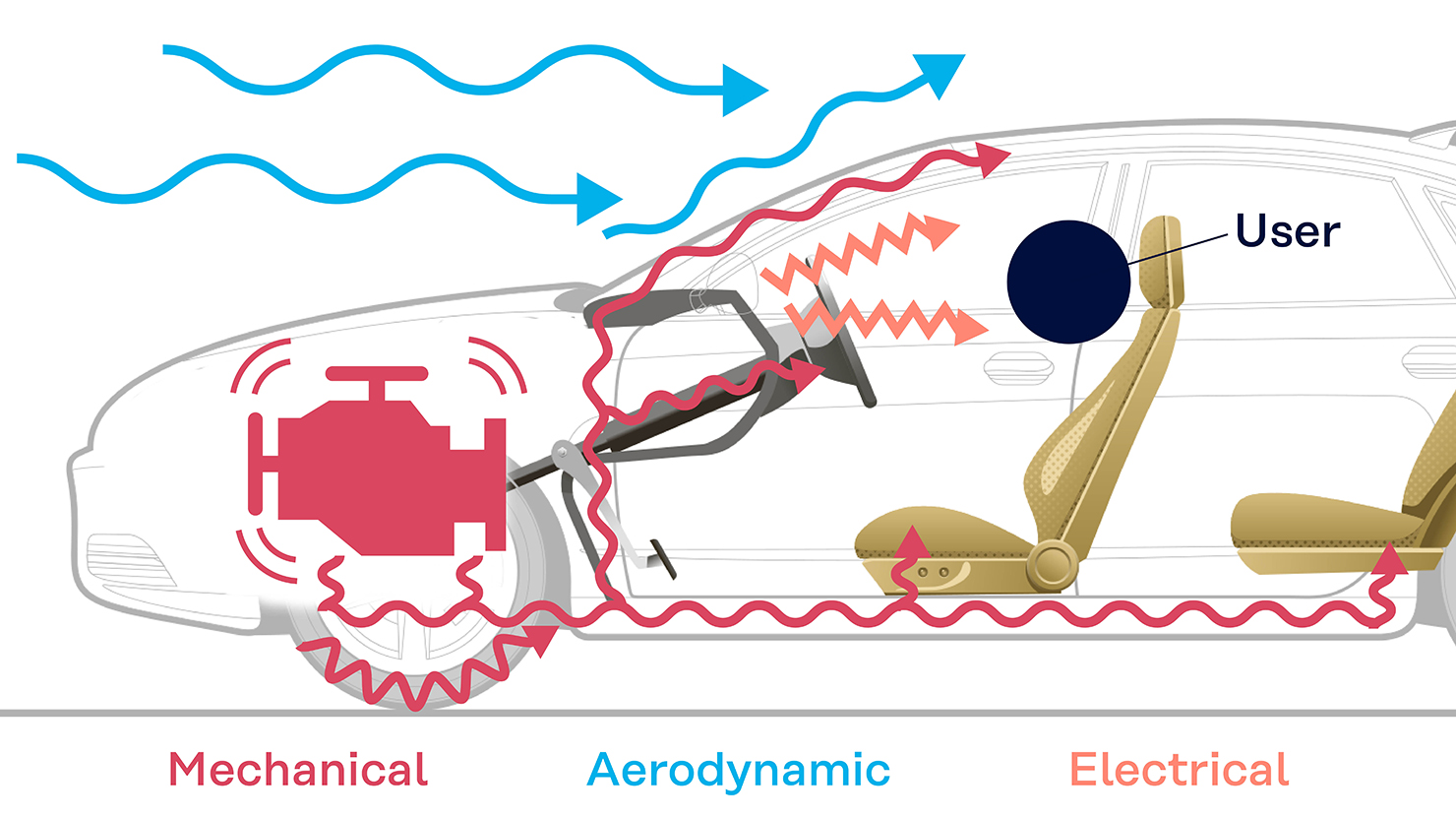
NVH sources in cars fall into one of three categories: aerodynamic, mechanical, and electrical.
- Aerodynamic: Created by wind, airflow against the car body, and HVAC systems. Includes airflow vibration and howling, whistling, and humming sounds, both tonal and broadband.
- Mechanical: Created by powertrain operation, brake friction, and tire friction. Includes road noise and vibrations, combustion noise, gear whine, and more, both tonal and broadband.
- Electrical: Created by alternators, EV motors, and EV inverters. Often high-frequency whines and tonal noises.
How to optimize NVH
Airborne noise is addressed primarily with sealing, absorption and barriers; damping of vibrating panels can also reduce airborne noise indirectly by lowering sound radiation. Structure-borne vibration, transmitted for example by the steering wheel, floor or seat, is addressed with isolation (mounts/bushings) and damping within the structure.
Damping
In NVH and automotive materials, damping limits mechanical vibrations by converting their energy into heat.
Viscoelastic materials are both elastic (springy) and viscous (fluid-like). When a slow physical force is applied, their molecules move against each other like a fluid, creating friction that dissipates the physical energy as heat. This gives them a high loss factor, or ability to convert physical force to heat, that allows them to absorb vibrations instead of transmitting them to the rest of the vehicle.
Isolation vs. damping
Isolation and damping are distinct concepts. Isolation reduces force transmission by decoupling the source from the structure (springs, rubber/TPE mounts), tuned via stiffness and geometry. Some isolators are viscoelastic, adding helpful damping. On the other hand, damping converts vibrational energy into heat inside viscoelastic materials or constrained-layer damping (CLD) patches, reducing resonance and panel radiation.
Viscoelastic polymers, including elastomers and thermoplastic elastomers, are the most widely used materials for NVH damping in both isolation components and damping materials. Learn more about the high loss factor materials supplied by Kuraray below.
Optimization process
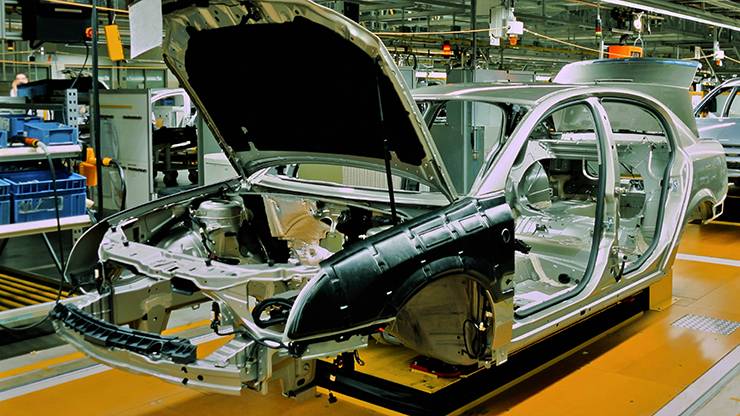
NVH optimization begins with measurement through both objective methods (microphones, accelerometers, dynamometers, and more) and subjective methods (user-experience harshness tests). Through a combination of acoustic modeling and real-world testing, engineers select the right designs and materials to limit NVH issues.
Low NVH design patterns in the mobility sector
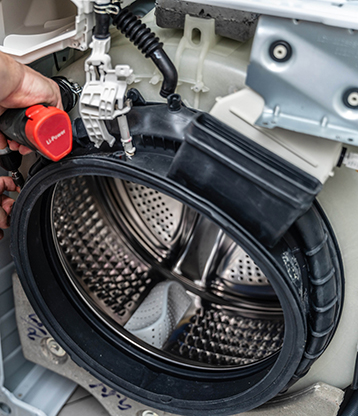
Isolating systems made of elastomeric materials with inherent damping properties are a crucial element of automotive design. Common vibration insulators include gearbox mounts and bushings, electric motor mounts and bushings, battery decoupling layers, and dash/console decouplers.
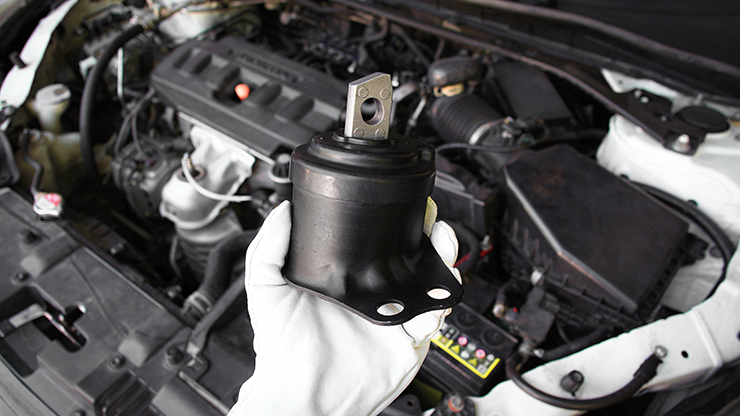
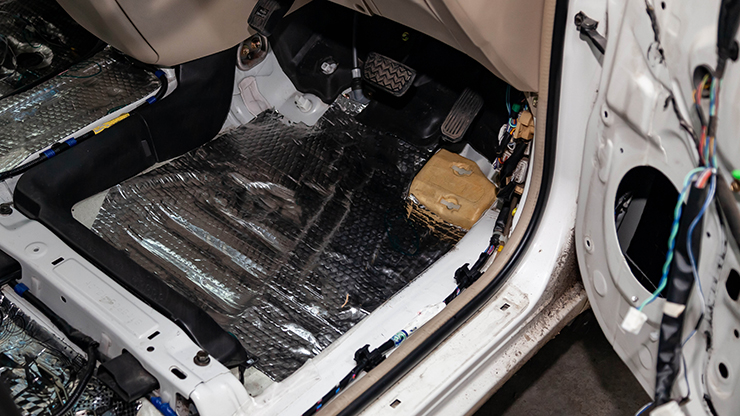
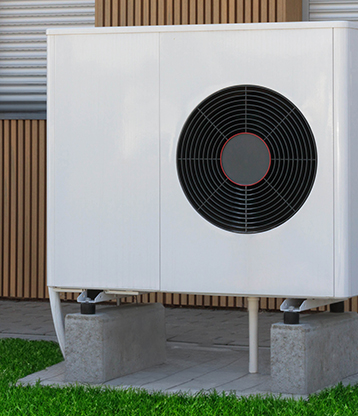
Other components require either damping or isolation depending on their function. HVAC compressor feet and lines primarily rely on isolation using elastomeric mounts, although their viscoelasticity provides some secondary damping. Interior squeak and rattle pads serve as true damping elements that suppress friction-induced noise and micro-vibrations. Tire/road-noise insulation, on the other hand, functions mainly as an absorption and barrier system rather than a damping treatment. Effective damping on interior paneling and pads is especially important, as their rattling is often one of the loudest and closest noises to the user during operation.
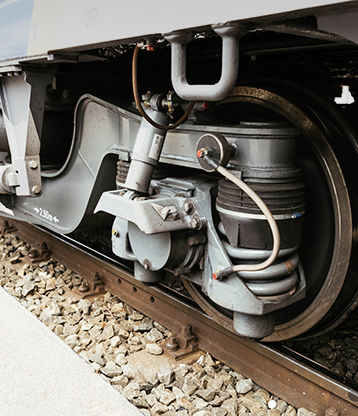
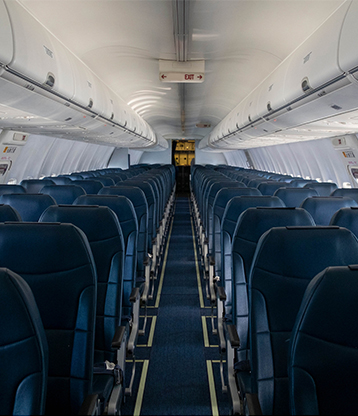
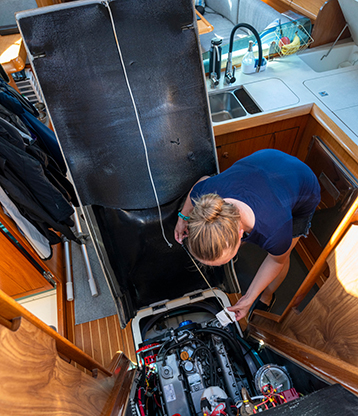
Other NVH solutions are more common in industrial & construction, electronics, and certain transportation industries, such as floating floors in trains, damped equipment mounts in airplanes, and hatch sealing in boats.
Choosing elastomers & TPEs for NVH in mobility
Elastomers and thermoplastic elastomers (TPEs) are highly customizable and suitable for almost any NVH damping application, in both isolation systems and general damping.
- Hardness: Consider the required hardness of your application. Options range from very soft thermoplastic elastomer gels to hard, durable plastics.
- Damping ability: Prioritize key mechanical properties such as damping ability (higher loss factor) and elasticity, and determine the temperatures and frequencies your application requires.
- Density: Where weight targets are a consideration, prioritize materials that offer high damping at low density.
- Fatigue and crack growth: For long-lasting components, ensure that parts that will be repeatedly compressed or stressed use materials with resistance to fatigue and crack growth.
- Chemical and oil resistance: Identify what the material will be exposed to, especially for use in isolation systems within the powertrain.
- Processing: Consider processing, lightweighting, and recyclability when comparing remoldable thermoplastic elastomers to traditional thermoset rubbers.
- Compatibility: Confirm the compatibility of the material with substrates when injection molding, overmolding, bonding, or using polymer adhesives. Check for form-factor compatibility when deciding on use in molded parts, laminates, films, or pressure-sensitive adhesives.
Materials to reduce noise, vibration, and harshness
Elastomers—including rubber and polyurethane—primarily provide isolation by tuning stiffness to reduce force transmission, while their inherent viscoelasticity also contributes secondary damping. Polyvinyl chloride is most commonly used as an acoustic barrier or insulation material due to its density and flexibility, rather than as a primary damping medium.
In contrast, viscoelastic polymers formulated specifically for damping—such as those used in specialized damping sheets and constrained-layer damping (CLD) systems—are among the most effective materials for reducing structural vibration and radiated noise.
Kuraray’s TPEs and Elastomers
Viscoelastic polymers combine the properties of rubber and plastic in a material that is durable, highly processable, effective across broad temperature ranges, and excellent at absorbing and dissipating energy.
HYBRAR™
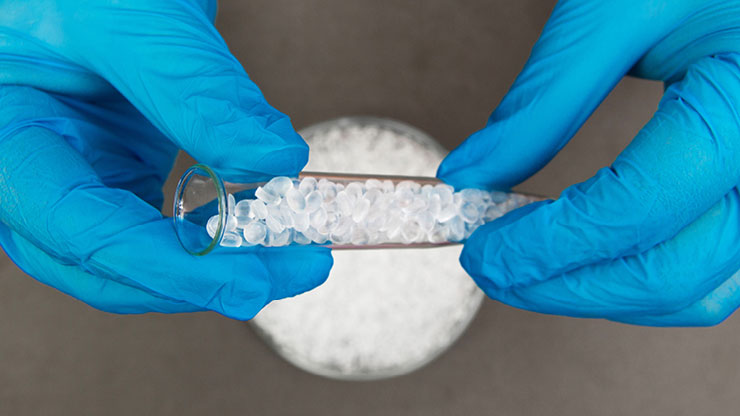
The unique block-copolymer, HYBRAR™, is Kuraray’s specialty offering for excellent sound and vibration damping over a broad temperature range. HYBRAR™ is also a key component in flexible compounds with superior damping performance. Furthermore, it functions as a modifier for automotive plastics such as ABS and PBT, imparting vibration damping properties that improve NVH (Noise, Vibration, and Harshness) within mobility interiors.
SEPTON™
Kuraray’s SEPTON™ series of styrenic block copolymers offers high elasticity, excellent mechanical properties, high heat resistance, low-temperature performance, and good chemical and weathering resistance. As a safe, durable, and easily processable TPE with rubber-like elasticity, it is an ideal replacement for slow-curing rubbers in automotive materials.
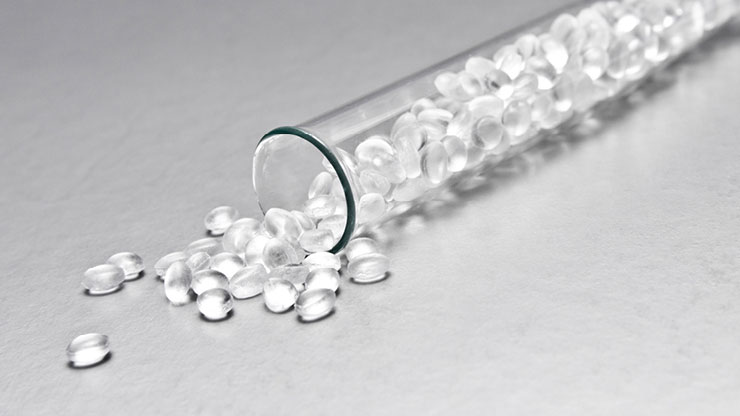
KURARAY LIQUID RUBBER
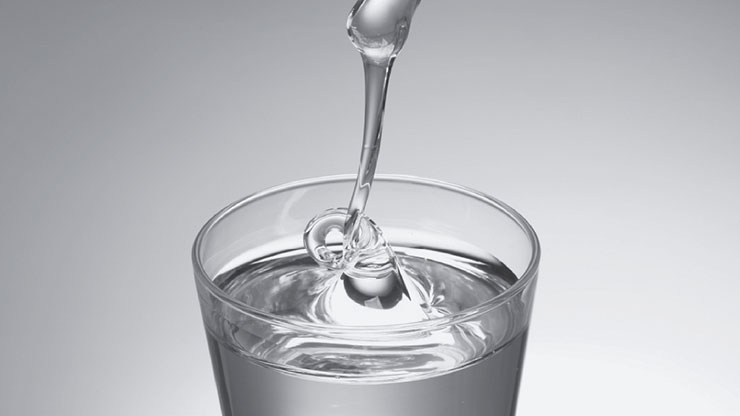
For rubber-based vibration damping, Kuraray offers KURARAY LIQUID RUBBER, a flexible plasticizer and tackifier that is co-vulcanizable with base rubbers. KURARAY LIQUID RUBBER can reduce mixing time and energy consumption, offers improved durability, and comes in a variety of grades for a broad range of applications. For rubbers with excellent damping properties, ask for our liquid polystyrene-butadiene rubber (L-SBR).

Features & benefits
- TPE and rubber-based options
- Powerful sound and vibration damping
- Excellent heat and weathering resistance
- Improved processability

Applications
- Automotive
- Mobility: Rail, marine, and aviation
- Industry & construction
- Electronics
Conclusion
Viscoelastic polymers, such as thermoplastic elastomers, are an ideal material for NVH damping in both isolation systems and structural damping. To learn more about Kuraray’s elastomers for use in NVH damping, reach out to our experts using the contact form below.
Contact