




Thermoplastic Elastomer Gels Explained
A thermoplastic elastomer gel, or TPE gel, is (with some exceptions) a blend of a solid thermoplastic elastomer and a liquid plasticizing oil. As gels, these materials provide softness, elasticity, and cushioning. As thermoplastic elastomers, they can be repeatedly heated and reformed and are highly customizable, offering many processing advantages.

Key takeaways for product designers and buyers
TPE gels combine the high processability, strength, and elasticity of TPEs with the unique softness, superior elasticity, and cushioning properties of gels. Ready to learn more about the benefits of TPE gels? Get in touch with our team using the contact form below.

TPE gel in simple terms
- Gel-like softness and cushioning
- Rubber-like elasticity
- Ease of processing
- Highly customizable appearance and feel

Business benefits at a glance
- Soft-touch comfort and premium feel
- Superior cushioning and shock absorption than standard TPEs
- More efficient processing than silicone and thermoset gels
- Recyclability and sustainability through reprocessing
When should you consider TPE gels rather than standard TPEs?
Thermoplastic elastomers are flexible, strong, and highly processable, but they don’t offer the softness and damping capability that some applications demand. Investigate TPE gels if you need a material with ultra-soft feel, excellent cushioning, and good shock absorption that is also suitable for overmolded components such as grips and seals.
What is a thermoplastic elastomer gel?
TPE gel compounds combine the rubber-like properties and elasticity of thermoplastic elastomers with liquid plasticizing oils to create highly processable and remoldable cushioning materials.
The basics of thermoplastic elastomers (TPEs)
Thermoplastic elastomers are durable, processable, and recyclable plastics with the rubber-like properties of elastomers. They contain both hard domains (which give them their strong, plastic properties) and soft domains (which give them their flexible, elastic properties). Hard domains can consist of polymers with a high glass transition temperature or crystalline polymers, while soft domains typically include amorphous polymers with a low glass transition temperature or polymers plasticized by additives such as a plasticizing oil. TPEs may be produced by blending two separate hard and soft components, or by creating a block copolymer which contains both hard and soft segments within a single polymer chain.
Since they are thermoplastic, TPEs become processable liquids when heated and return to their solid form when cooled. This makes them both easier and quicker to process than elastomers such as rubber, which require time-consuming vulcanization steps and cannot be reprocessed.
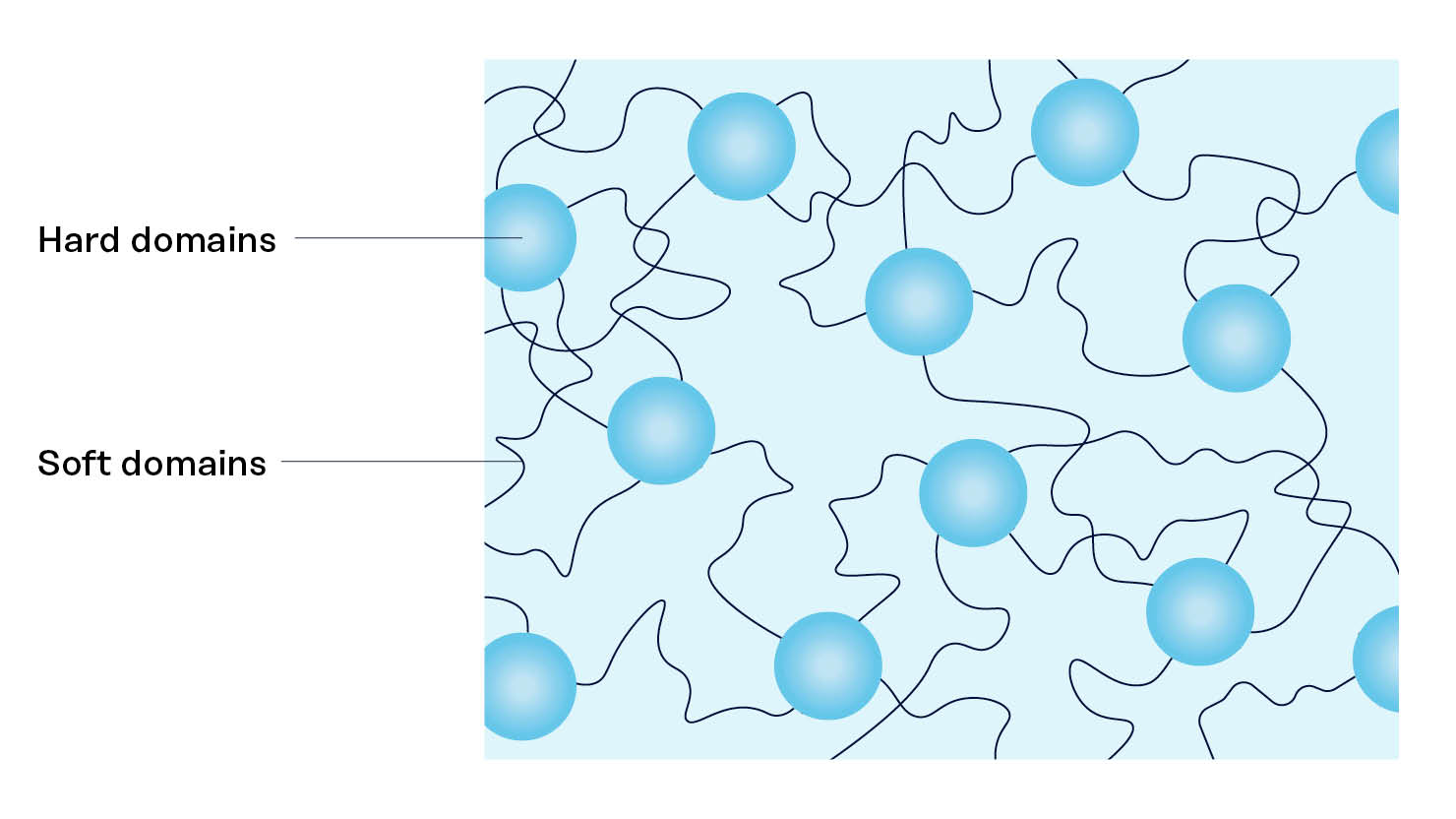
Typical formulation and morphology of TPE gels
TPE gel compounds typically consist of a styrenic block copolymer (SBC) mixed with plasticizing oil. To produce a TPE gel, the TPE is blended with plasticizing oil, heated for melt-kneading if necessary, and molded under heat. During the cooling process of molding, a physically crosslinked network based on the TPE is formed. The result is a thermoplastic material with the softness, elasticity, and cushioning properties of a gel.
By varying the SBC used as a base or the concentration of oil blended into the polymer network, developers can fine-tune physical properties like hardness and tackiness. This allows product designers to dial in exactly how soft, sticky, and cushioning a gel should feel in use. Some TPE gels may also be loaded with water (TPE hydrogels).
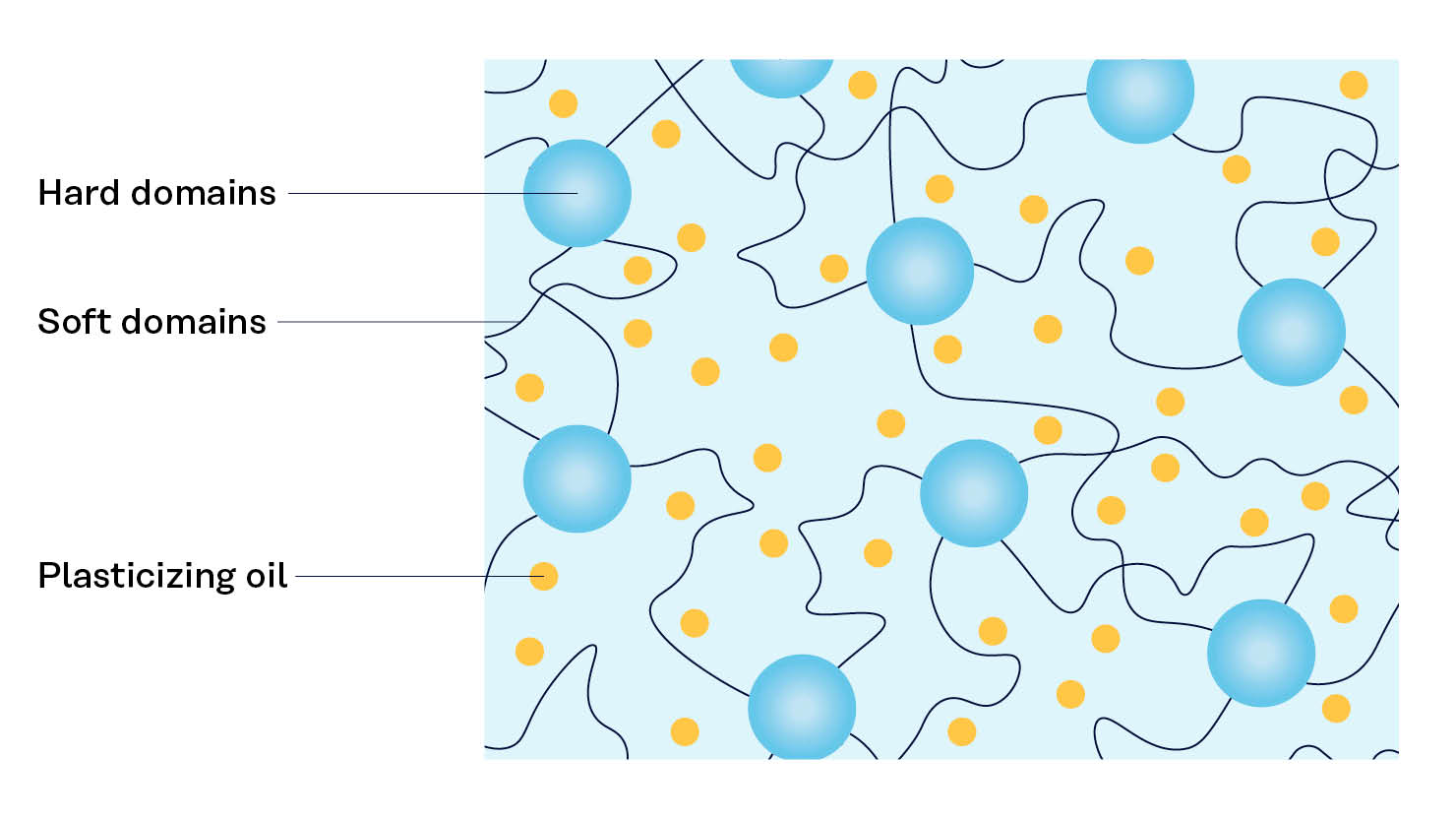
What makes a TPE a “gel”?
TPE gels are mostly liquid by mass and are given structure only by the dilute physical chain entanglements of the base polymer. As a result, they are typically very soft materials that show high deformation at low force and recovery after compression. Their softness, elastic recovery, and low compression set enable excellent cushioning and shock absorption.
How TPE gels differ from standard TPEs
While TPEs come in a wide range of hardnesses and elasticities, TPE gels are super-soft, elastic materials with excellent resistance to deformation after compression, or low compression set. These properties give them superior cushioning abilities, as well as a generally tackier surface feel than most TPEs.
Key properties of thermoplastic elastomer gels
Ultra-soft TPE gels are soft and elastic, with good cushioning ability, processability, and customizability. They are typically recyclable, and some of them are biocompatible and non-allergenic.
Softness and low hardness range
The defining physical property of a thermoplastic elastomer gel is its softness. The hardness of a material is assessed by applying a deformation force with a Shore durometer, which has several scales for materials of different hardness, each ranging from 0 to 100. TPE gels typically fall between 0 and 100 on the Shore 00 scale (for super-soft rubbers and gels) and 0 and 30 on the Shore A scale (for soft to medium rubbers).
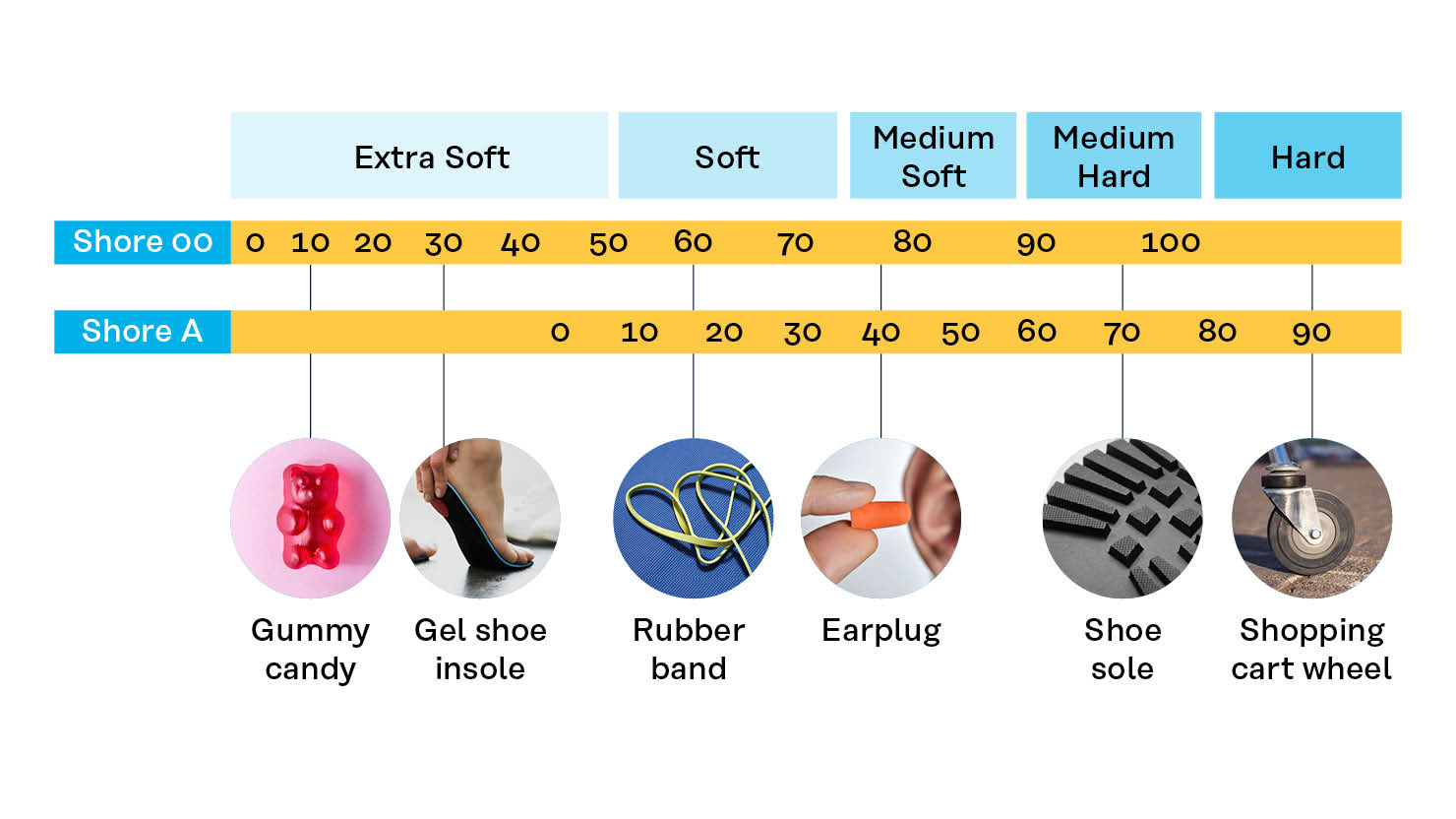
Elasticity and compression set
TPE gels get their elasticity from their thermoplastic elastomer base. A low compression set (meaning minimal permanent deformation after compression) is critical in many gel applications. TPE gels can be formulated with very low compression set, but in general, it is challenging to maintain low compression set under prolonged compression or high temperature.
Shock absorption and stress distribution
The low hardness, high elasticity, and low compression set of TPE gel compounds give them ideal shock absorption and help distribute stress effectively. They can be used in gel dampers, mechanical shock absorbers, and acoustic insulation.
Transparency, colorability, and surface feel
TPE gels can be produced with varying levels of transparency and usually offer excellent colorability. Many also have higher surface friction, resulting in a tacky feel that is ideal for grip. Other applications require TPE gels with dry or silky-smooth surfaces.
Processability and overmolding
Unlike thermoset materials, which require lengthy curing steps, thermoplastic elastomers like TPE gels only need to be heated, processed, and cooled. Scrap byproducts from TPE gel production processes can also be remelted and reused, unlike comparable thermoset materials such as silicone rubber. As a thermoplastic material, TPE gels are compatible with a variety of processing methods, including injection molding, extrusion molding, compression molding, and 3D printing.
Recyclability and sustainability
The thermoplastic properties of TPE gels allow them to be heated and reprocessed, unlike thermoset plastics. And they can, in principle, be recycled more easily than thermoset materials, depending on the collection and recycling systems in place. The ongoing development of bio-based thermoplastic elastomers and plasticizing oils also offers potential avenues of sustainability for TPE gel products.
Biocompatibility
Some TPE gels can be formulated to be biocompatible, non-allergenic, and sterilizable. Always consider the base TPE, plasticizing oil, and any other additives when assessing biocompatibility.
How TPE gels are processed and designed
Because they are based on thermoplastic elastomers, TPE gels share many of the same processing options and design considerations.
Typical processing methods for TPE gels
TPE gels are typically prepared by pre-mixing the thermoplastic elastomer with the liquid plasticizing oil, and melt-kneading with additives under heat. Once blended, this liquid mixture can be processed using injection molding, extrusion molding, and compression molding, just like any other thermoplastic. Overmolding is also possible as a variation of these molding methods. In certain specialized processes or with specific formulations, some TPE gels can even be 3D printed. Once processed, the mixture cools and forms the gel.
Designing soft-touch overmolded parts with TPE gels
TPE gels are used in overmolding to create cushioned grips and seals, a process in which one component of a product is molded directly over another component. When designing an overmolded part, it is important to ensure compatibility between the TPE gel and the substrate for long-lasting adhesion. Other considerations include the softness and tackiness of the gel.

Pitfalls to avoid when working with ultra-soft gels
When a TPE gel is extremely soft or tacky, it is prone to damage during the demolding process. Avoid excessive force and ensure complete cooling during demolding. Similarly, it is important to ensure well-controlled flow during processing to avoid voids in the material, which can lead to damage during demolding or during use. Ultra-soft gels that are prone to creep or stress relaxation may also deform during or after assembly, causing tolerance issues.
Common applications of thermoplastic elastomer gels
A variety of industries rely on the superior softness, shock absorption capabilities, and efficient processing offered by thermoplastic elastomer gels.
Medical
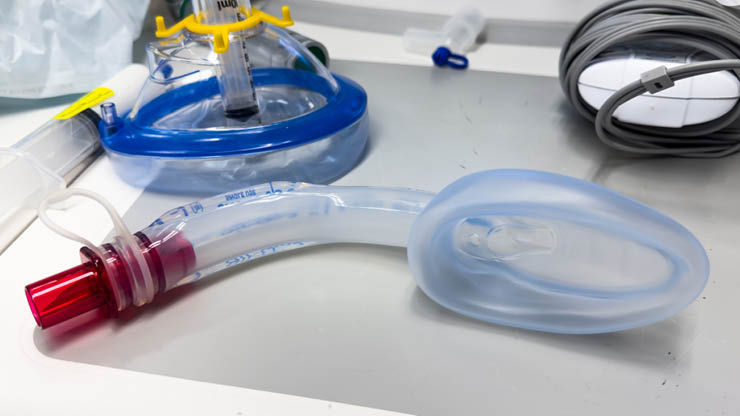
High-clarity, easily processable thermoplastic elastomer (TPE) blends that are biocompatible, non-allergenic, and sterilizable are the ideal material for many medical applications. They are often found in orthopedic pads and liners, pressure-dispersing pads, prosthetic cushioning, soft interfaces in medical devices, electrodes, cushioned dressings and bindings, cushions for wheelchairs, and medical bed mattresses and pillows.
Consumer goods
TPE gels are used in many consumer goods for their softness, grip, and compression set. They can be overmolded as grips in products such as toothbrushes, razors, pens, and tools, and are also used in cushioned products such as wrist rests and seat pads, bed mattresses and pillows, and soft-touch toys.
Sporting goods & footwear
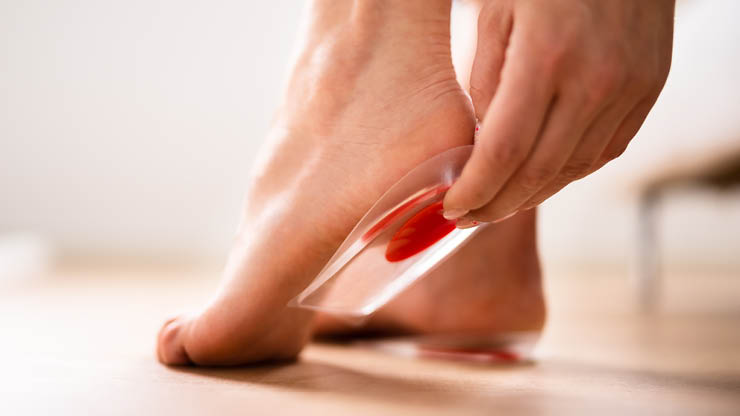
Footwear, and specifically shoe insoles and midsoles, protective equipment, sporting goods, swimming goggles, and handles all take advantage of the soft grip, damping ability, and cushioning of TPE gels.
Automotive
TPE gel compounds can be used in automotive components such as overmolded grips and seals, cushioning, and vibration-dampened assemblies.

Electronics
TPE gels are most often seen in soft housings and grips on electronic devices, but may also be used in bumpers, contact pads, wearable bands, overmolded seals, and vibration dampeners, as well as sealing compounds, electronic component potting materials, thermal interface materials, and soft components for industrial and humanoid robots.
Industrial & construction
In addition to their use in machinery as mechanical shock absorbers, grips, and overmolded seals, TPE gels are also manufactured as vibration-damping material and acoustic insulation in industrial and construction applications.
How to select the right TPE gel for your application
When developing a TPE gel, it’s important to consider material factors, like softness and compression set, as well as production factors, such as cost and material compatibility.

Key technical criteria
The key physical properties of TPE gels include their softness, compression set, elasticity, tensile strength, and glass transition temperature. In addition to the physical demands of your application, consider the operating temperature you require and any chemical exposure the product may have to skin oils, cleaners, or disinfectants. If you plan to overmold the TPE gel, consider its compatibility with your base substrate.
Design and user-experience criteria
Since TPE gels are often used in consumer goods and medical devices, it’s important to consider not just the thickness and geometry of the gel component, but also how it looks and feels. Most TPE gels have a tacky surface, but they can also be altered through polymer modification to produce a dry or silky-smooth texture. Know whether your component will need to be transparent, opaque, or colored.
Regulatory and risk-management criteria
Determine the safety and regulatory standards that your application and markets will demand. The most common considerations include standards for medical applications (including ISO 10993 regulations) and food contact applications in your target markets (such as EU and FDA requirements).
Cost, supply security, and sustainability
Process costs are influenced by material costs, cycle time, scrap recyclability, and more. When evaluating cost, weigh the lower cost of TPE gels compared to silicone, increased processability, and elimination of curing steps. Consider developing supply security through long-term partnerships and investigating sustainability options such as recyclability and bio-based polymers.
Contact our experts
Are you interested in learning more about these criteria, or another consideration unique to your application? Our experts will discuss your questions and assist you with selecting the TPE gel materials that are right for your needs—just reach out through the contact form below.
Kuraray’s materials in thermoplastic elastomer gels
Kuraray offers a range of SEEPS and SEBS, which are ideal bases for high-performance ultra-soft TPE gels.
SEPTON™ in TPE gels
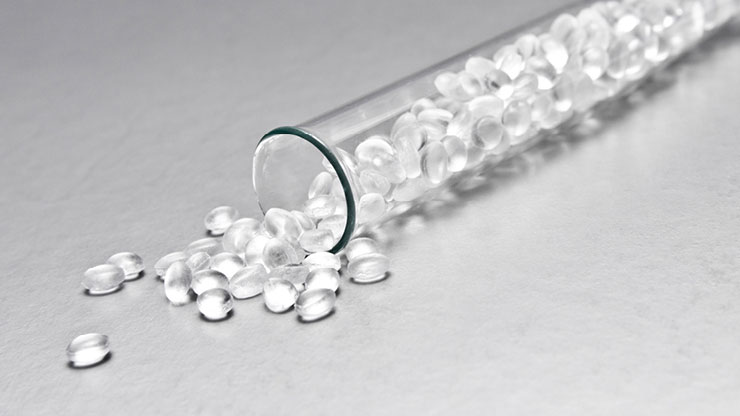
Kuraray’s SEPTON™ series of styrenic thermoplastic elastomers includes premium SEPTON™ 4000-series (SEEPS), a range of grades that are soft, transparent, and durable. The SEPTON™ 4000-series (SEEPS) exhibits exceptional oil absorbency and improves on SEBS alternatives in tensile strength and oil retention. Lower molecular weight grades offer lower viscosity with excellent moldability, while higher molecular weight grades show excellent tensile strength and low compression set. TPE gels using SEPTON™ are ideal for use in medical applications, soft touch compounds, footwear, consumer goods, sporting goods, automotive applications, and more.
SEPTON™ J-series in TPE gels
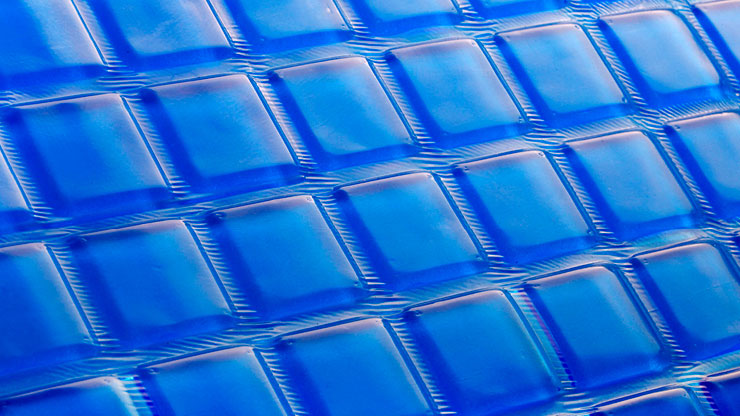
SEPTON™ J-series is Kuraray’s specialty product for high-performance gels that require long-lasting stability, strong damping, and superior compression set. This hydrogenated styrenic block copolymer combines cushioning and strength for extremely soft and durable gels. Its low density and smooth, natural feel can make it an ideal replacement for silicone in certain applications. SEPTON™ J-series is suitable for use in footwear, sporting goods, industrial components, and electronics.
How Kuraray supports TPE gel projects
Kuraray operates as both a global supplier and a development partner. For customers still developing their product, we offer comprehensive technical support, including material selection, prototyping, and testing. For those moving to production, we provide consistency through ongoing technical support and co-development with compounders.
The future of TPE gels
Ongoing materials research is enabling the next generation of TPE gels. These advancements include structural innovations that produce softer and thinner components, bio-based materials that improve sustainability and circularity, and functional gels with conductive and antimicrobial properties.
Conclusion
Thermoplastic elastomer gels offer ideal softness, elasticity, shock absorption ability, and ease of processing. If your application might benefit from the unique properties of TPE gels, get in touch with our experts using the contact form below to learn more about how Kuraray can serve as a partner in product development.
Contact